

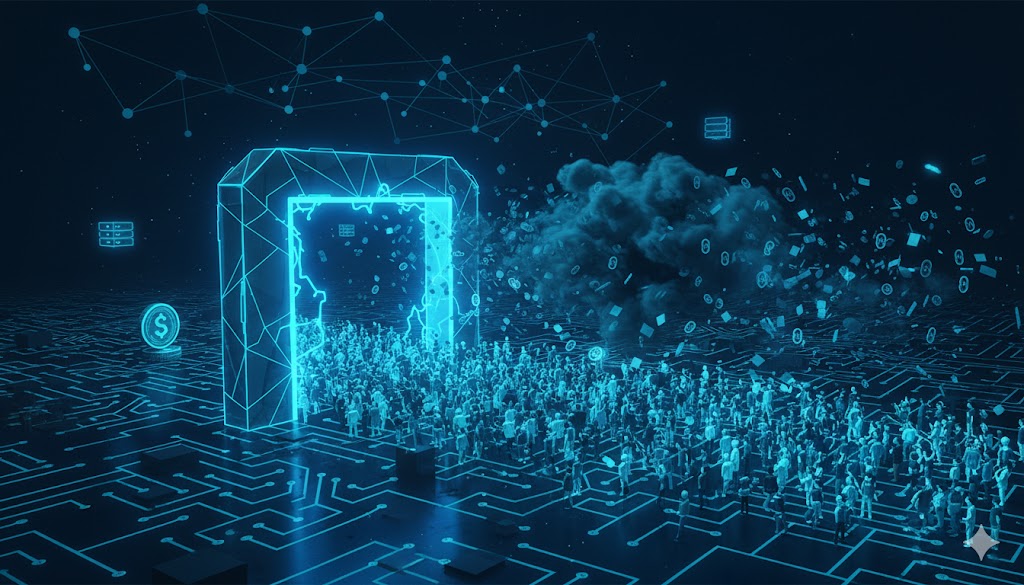
Blockchain games, or Web3 gaming, promise players something entirely new: true ownership of digital assets. Imagine that the sword or unique skin you buy truly belongs to you, not the developer company. You can sell it, trade it, or even use it in another game. This is an exciting prospect. However, the path to mass adoption faces a serious obstacle that often scares off newcomers: scalability and high transaction costs, known in the crypto world as “gas.”
What is “Gas” and Why Does It Hinder Games?
Let’s start with the basics. Blockchains are decentralized networks. This means there’s no single central server like in traditional games. Every transaction-whether buying an item, moving a character, or simply swapping tokens-must be verified and recorded by multiple independent computers (validators or miners) worldwide.
The Essence of Transactions and “Gas”
Every action on a blockchain requires computational work. It’s like sending a letter: the longer and more complex the letter, the more stamps you need. In blockchain, this “payment for work” is called gas (or fees).
Gas isn’t just an amount of money you pay. It’s essentially a unit measuring the computational complexity of a transaction. The price you pay is formed by the formula:
Transaction Price = (Gas Units × Gas Price per Unit) + Tips
- Gas Units (Gas Limit): The maximum amount of computational work you’re willing to pay for your transaction. For example, a simple token transfer might cost 21,000 gas units.
- Gas Price: The price you’re willing to pay per unit of computational work. It fluctuates based on network congestion.
Layer 2 (L2) Technological Solutions: Offloading the Main Blockchain
The most popular and effective approach to solving scalability is using Layer 2 (L2) solutions. Imagine the main blockchain (L1) as a main highway constantly jammed with traffic. L2 solutions are high-speed side roads where transactions are processed quickly and cheaply, with only final “summaries” of the work sent back to the L1 highway.
Rollups: Batch Data Processing
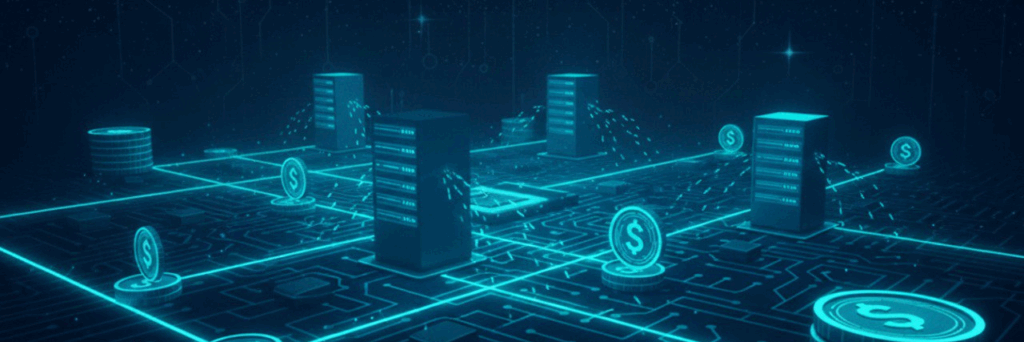
Rollups-the dominant L2 type today-literally mean “rolling up” or “batch packing.” They take hundreds or thousands of L2 transactions, process them off the main chain, and then “roll them up” into a single, compact cryptographic proof packet sent to L1.
Advantages of rollups:
- Significant cost reduction: Gas fees for thousands of transactions are shared among participants, making individual actions minimally expensive.
- Inherited security: They leverage the main L1 blockchain for security and final verification, making them highly reliable.
There are two main types of rollups, each with its own method of proving transaction validity:
Optimistic Rollups
They’re called “optimistic” because they assume all processed transactions are valid. The transaction batch is published to L1 without immediate verification.
Mechanism: They operate with a “challenge period.” Any network participant can challenge a transaction if fraud is suspected. If the challenge succeeds, the fraudster is penalized.
Gaming Feature: They provide high speed, but withdrawing funds from L2 to L1 can take up to 7 days due to waiting for the challenge period to end. This can be inconvenient for gamers wanting to quickly sell assets.
ZK-Rollups (Zero-Knowledge Rollups)
ZK-Rollups use advanced cryptography to create zero-knowledge proofs. These proofs mathematically verify that all transactions in the batch are correct without revealing any transaction data.
Mechanism: Instead of waiting for challenges, ZK-Rollups generate a complex but highly compact cryptographic proof of validity, instantly verifiable on L1.
Gaming Feature: They enable instant fund withdrawals (no challenge period), making them ideal for Web3 games where speed and quick asset trading are crucial.
Specialized Blockchains: Gaming “Launchpads”
Another powerful solution is creating specialized blockchains designed from the ground up for gaming needs. These are often called sidechains or application-specific blockchains (App-Chains).
Sidechains: Parallel Networks
Sidechains are essentially independent blockchains running parallel to the main one. They have their own validators and rules but are anchored to the main chain via a two-way bridge, allowing assets to move freely between networks.
Advantages:
- High throughput: Since the network isn’t shared with other apps (DeFi, NFT marketplaces), it can handle thousands of TPS.
- Low or zero fees: Developers often subsidize or eliminate transaction fees for users.
Trade-off: Sidechains have their own security model, which may be less decentralized than the main chain. Players must trust the sidechain’s security.
App-Chains: Custom Blockchains
App-Chains (application-specific blockchains) are the next evolutionary step. These are fully customized blockchains built from scratch for one or a few related games. The game developer fully controls all parameters: consensus algorithm, fee structure, block times.
Advantages:
- Maximum optimization: Tailor the blockchain to handle only game-specific transaction types. For example, make character movement transactions free, charging fees only for valuable item sales.
- Full predictability: Developers can guarantee stable, low fees—critical for a smooth gaming experience.
Trade-off: Requires more technical resources to launch and maintain a custom chain, plus attracting validators for security.
Outcomes: On the Path to Mass Web3 Gaming
The “gas” and scalability problem isn’t a dead end-it’s a temporary engineering challenge. L2 solutions and specialized blockchains are already transforming the unplayable high-fee experience into fast, cheap, and enjoyable.
Key Shift in Game Design
Thanks to these technologies, Web3 games move away from recording every minor action on the main blockchain. Instead, they can:
- Use L2 for most in-game actions: Movement, resource gathering, combat, consumable use-all fast and nearly free on L2.
- Use L1 only for high-value assets: Unique NFT items, large transfers, key contracts—anything needing maximum L1 security.
What This Means for Newcomers
For new players, this means the entry barrier is gradually disappearing. In the future, you likely won’t even think about which layer a transaction occurs on. The technology will work invisibly, ensuring:
- Instant in-game responsiveness.
- Minimal or zero fees for most actions.
- True ownership of your digital items, freely tradable and sellable anytime.
The development of L2 solutions and App-Chains is a critical step turning Web3 gaming from an exciting but expensive idea into an accessible, scalable platform for millions worldwide.
Future Challenges and Innovations
While L2 and specialized blockchains solve most issues, development continues. Improving bridges between various L2 networks and the main chain is a key focus. The easier and cheaper asset movement between “highways,” the better the gaming ecosystem.
Blockchain Interoperability
Interoperability becomes central. The ideal Web3 world isn’t a single blockchain but many specialized ones efficiently interconnected. Games can run on their App-Chain while using L2 tokens and seamlessly interacting with L1 NFT marketplaces. Creating secure, efficient protocols for this is the next frontier.
Account Abstraction
Another key innovation is account abstraction. This makes crypto wallets more like familiar Web2 game accounts. The goal: eliminate manual confirmation for every microtransaction and let game devs subsidize gas for players. This fully hides blockchain complexity, delivering a seamless experience.
Ultimately, all these efforts boil down to one goal: make Web3 gaming as convenient as traditional gaming while preserving its key advantage—decentralized, true ownership of in-game value.
Conclusion: Gas as an Innovation Driver
The high-fee “gas” problem has actually been a powerful innovation catalyst. The need to bypass early blockchain limitations birthed elegant solutions like rollups and App-Chains.
Web3 gaming is at a turning point. The tech foundation for mass scaling exists and is actively implemented. This paves the way for a new generation of games where player-owned economies meet top-tier performance.
Summary of Key Concepts:
- Gas: Payment for computational work, rising with network load.
- L2 Solutions (Rollups): Bundle thousands of transactions for cheap, fast processing.
- Specialized Blockchains: Fully optimized networks built for gaming.
- Interoperability: Linking all networks into a unified, efficient ecosystem.
Together, these ensure Web3 gaming will evolve from a niche high-fee phenomenon into an integral part of the entertainment industry in the coming years.