

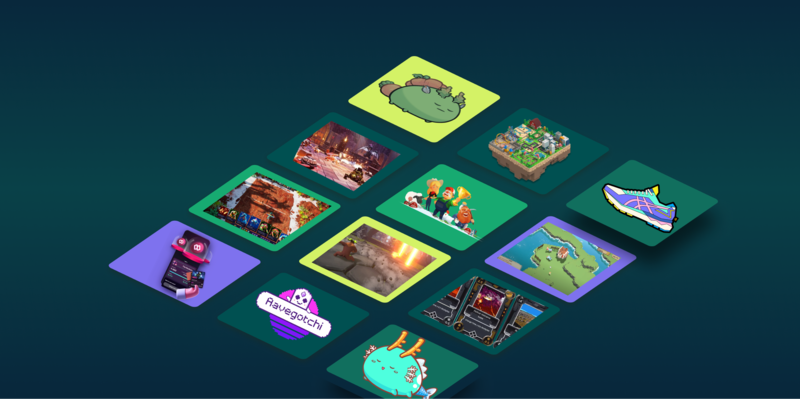
The blockchain gaming market continues to evolve rapidly—from simple NFT-based Play-to-Earn projects in 2021–2022 to complex virtual worlds with fully functioning economies. In 2026, the industry stands on the verge of a new growth phase, driven by technological advancements, shifting consumer behavior, and increasing institutional investment. Let’s take a closer look at the trends, challenges, and opportunities that will shape the future of blockchain gaming in 2026.
Key Trends of 2026
1. From “Play-to-Earn” to “Play-to-Own”
In the early years of blockchain gaming, the Play-to-Earn (P2E) concept dominated the market: users could earn cryptocurrency simply by spending time in a game. By 2026, however, a qualitative shift has taken place. Economic models have become more sustainable, the influence of speculative capital has decreased, and the focus has moved toward ownership of in-game assets—NFTs, virtual land, and items.
Players increasingly value:
- true ownership of digital assets;
- interoperability of items across different projects;
- participation in the governance of gaming ecosystems.
This transition reflects the market’s growing maturity and lays the foundation for a fully-fledged digital economy.
2. Integration with Metaverses and Web3 Infrastructure
Blockchain games are increasingly becoming part of larger metaverses—interconnected digital worlds where users can:
- interact beyond the boundaries of a single game;
- trade assets across different projects;
- participate in events and communities.
Web3 infrastructure (DAOs, decentralized marketplaces, and multichain ecosystems) is becoming the norm, providing players with deeper social and economic engagement.
3. The Rise of Multichain Games
Single-chain solutions with high gas fees are gradually giving way to multichain approaches. Projects leverage multiple networks (Ethereum, Polygon, Solana, and others) to optimize transaction speed and reduce costs. This helps strike a balance between security, scalability, and economic efficiency for players.
Multichain games are emerging as a dominant trend because they:
- enable interaction with multiple ecosystems;
- offer lower transaction costs;
- drive broader adoption and accessibility.
4. Audience Expansion and Improved UX
For blockchain games, 2026 is a battle for the mass market. More projects are offering:
- simplified onboarding (no complex crypto wallets at the start);
- familiar, AAA-level gameplay experiences;
- hybrid models with partially centralized infrastructure to ensure smoother UX.
As a result, blockchain games are becoming competitive not only in terms of Web3 features, but also in gameplay quality, graphics, and social interaction.
Key Industry Challenges
Economic Sustainability
Many blockchain games still face issues such as:
- overheated in-game economies;
- speculative demand for NFTs;
- dependence on cryptocurrency market volatility.
Without sustainable economic models, projects struggle to retain players and deliver real value through in-game assets.
Regulation and Legal Compliance
Across different jurisdictions, several questions remain unresolved:
- how to classify in-game digital assets;
- whether games require licensing or regulation (for example, as financial products);
- how to protect user rights and prevent fraud.
While regulators are gradually developing frameworks, regulation remains fragmented and often ambiguous.
Security and Fraud
As audiences grow, so does the number of threats, including:
- smart contract exploits;
- phishing attacks and stolen NFTs;
- manipulation in secondary markets.
Addressing these risks requires stronger security standards, regular code audits, and educational initiatives for players.
Opportunities and Future Outlook
Institutional Investment
Major funds and corporations are increasingly interested in blockchain gaming, particularly in projects with sustainable economies, large user bases, and strong potential for metaverse integration.
This brings capital inflows, infrastructure development, and faster innovation across the industry.
New Formats and Genres
By 2026, we can expect:
- the emergence of genres previously uncommon in blockchain gaming (MMOs, large-scale RPGs, sports simulations);
- hybrid projects combining localized and distributed economies;
- deeper integration of AI into gameplay mechanics and asset management.
Conclusion: Where the Market Is Heading
The blockchain gaming market in 2026 is about far more than NFTs and crypto rewards. It represents:
✔ an economy of digital ownership,
✔ a multichain Web3 infrastructure,
✔ new gaming genres and audiences,
✔ institutional investment and real-world use cases.
However, sustainable growth will depend on how effectively the industry addresses its core challenges: economic stability, regulation, security, and user experience.